
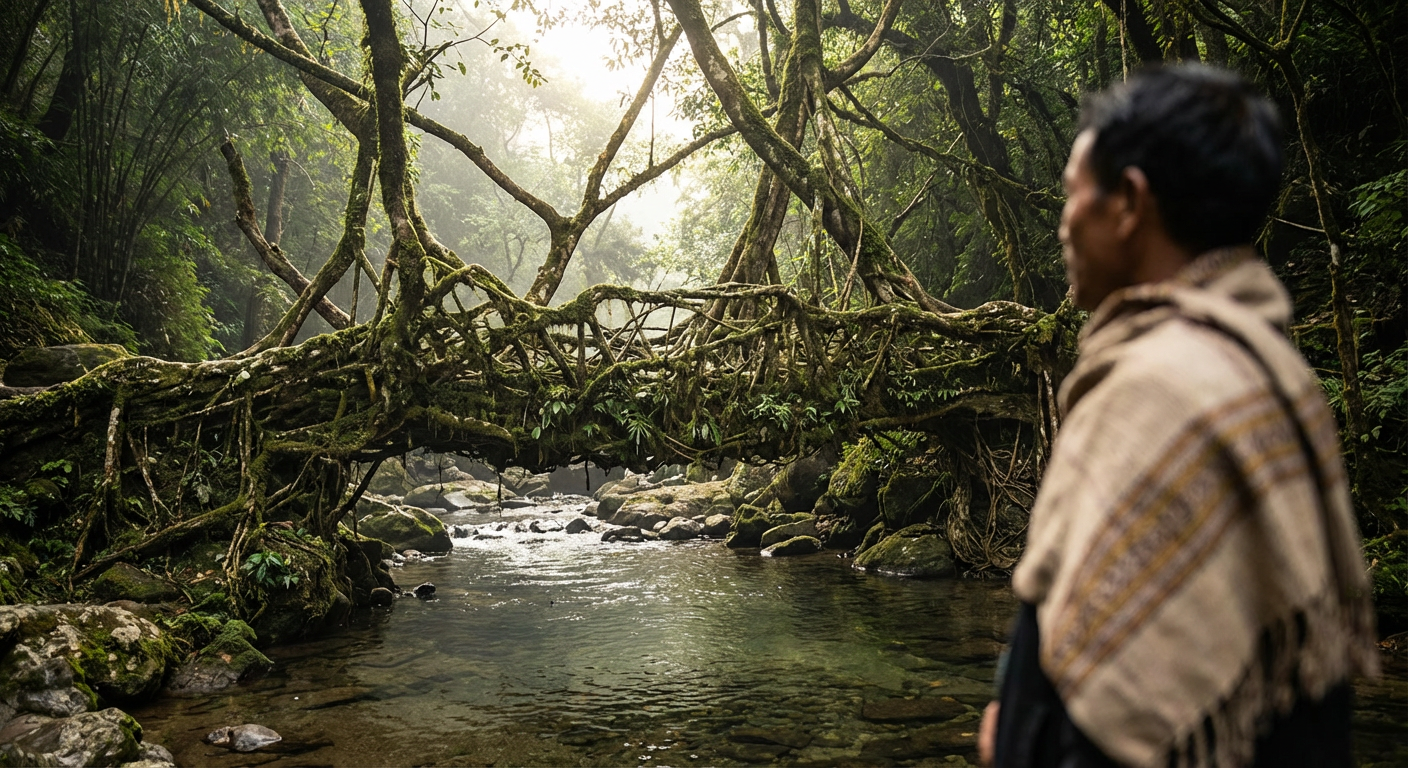
Northeast India remains one of the least explored regions in the country, which means it still holds countless places that most travelers have never even heard of.
While spots like Tawang and Kaziranga get their share of attention, there are dozens of smaller villages, lakes, valleys, and cultural sites that remain blissfully under the radar.
This list is for travelers who want to go beyond the standard itinerary and experience the Northeast in its most authentic form.
These are places where you might be the only outsider for miles, where local traditions run deep, and where the landscapes will leave you speechless.
1) Mawlynnong, Meghalaya
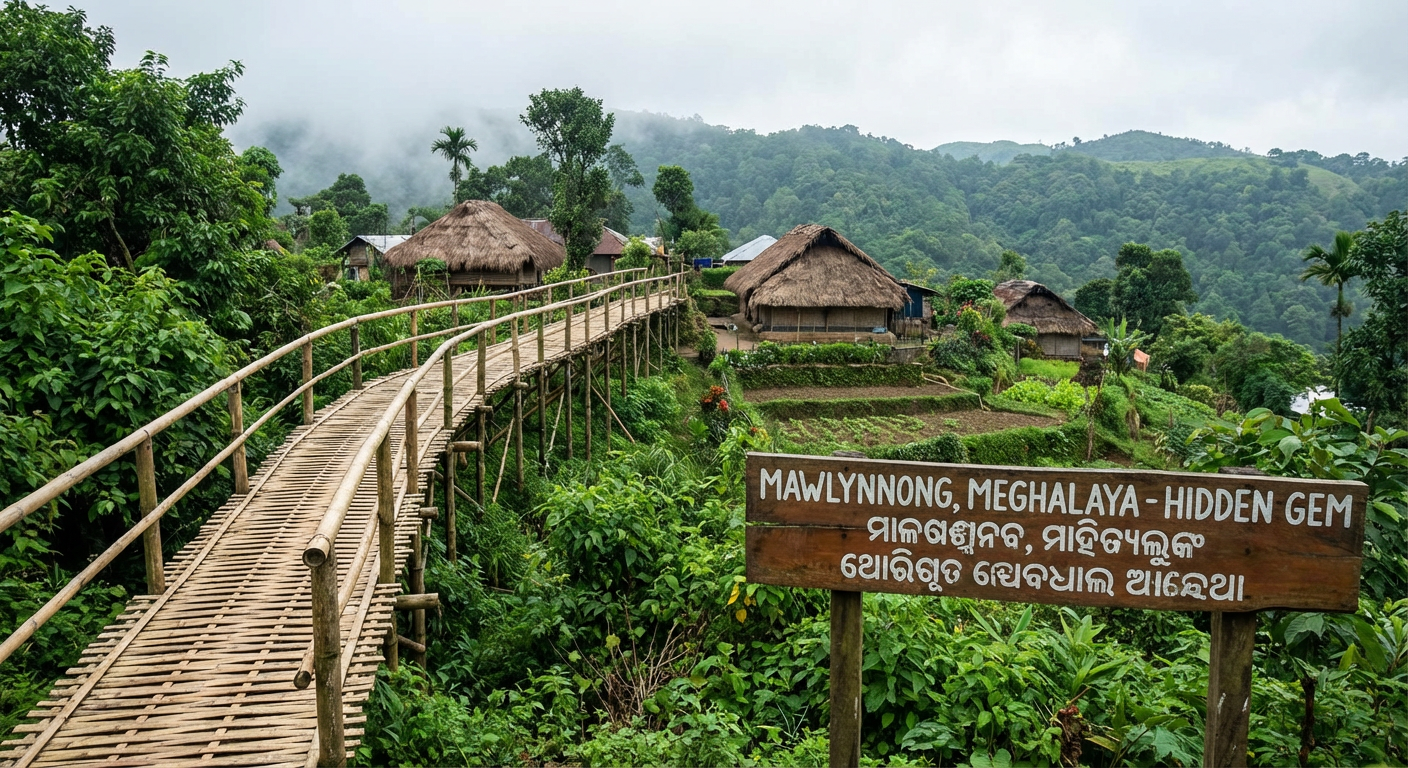 Often called Asia’s cleanest village, Mawlynnong is a small Khasi village near the Bangladesh border that has maintained an almost obsessive level of cleanliness and environmental care.
The entire village is spotless, with bamboo dustbins lining the pathways and locals taking genuine pride in their surroundings.
Beyond the cleanliness, the village offers a living root bridge, a sky view platform that overlooks the plains of Bangladesh, and an incredibly warm community that welcomes visitors with genuine hospitality.
The walk through the village feels like stepping into a different world, one where nature and human life exist in perfect balance.
2) Ziro Valley, Arunachal Pradesh
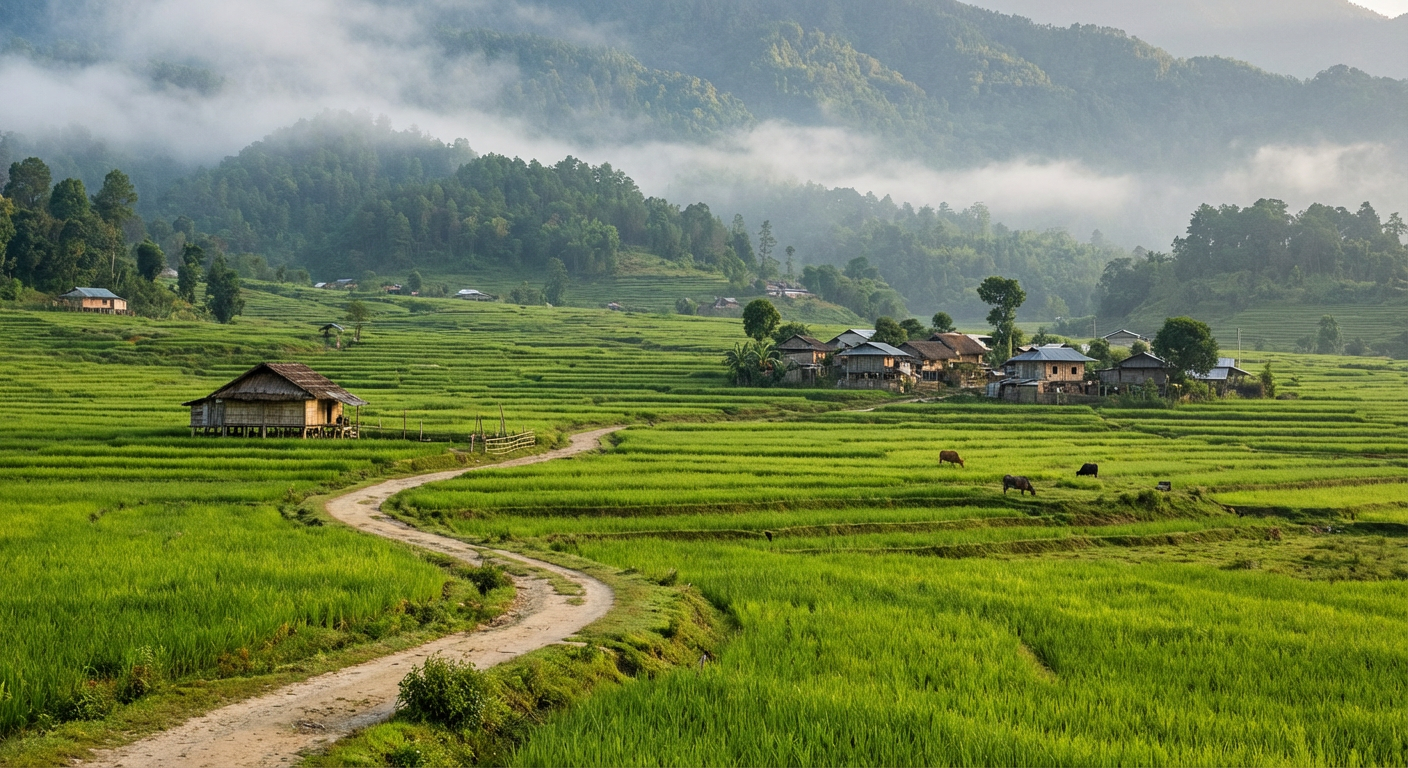 Tucked away in the lower Subansiri district, Ziro Valley is home to the Apatani tribe, known for their sustainable agricultural practices and distinct facial tattoos among older women.
The valley itself is a patchwork of rice fields, bamboo groves, and pine-covered hills that seem to glow golden during sunrise. What makes Ziro special is not just its beauty but the cultural richness of the Apatani people, who have preserved their way of life for centuries.
Walking through villages like Hong and Hari, you will see traditional houses on stilts, community fishing in rice fields, and a pace of life that feels entirely removed from modern chaos.
3) Longwa Village, Nagaland
Longwa sits directly on the India-Myanmar border, and the village chief’s house is famously split between the two countries.
This remote Konyak Naga village is one of the last places where you can meet the older generation of headhunters, men with facial tattoos that signify their warrior past.
The village is perched on a hilltop with sweeping views of the surrounding valleys and Myanmar beyond.
Visiting Longwa requires a special permit and some effort to reach, but the experience of sitting with village elders and hearing their stories is something you will carry with you for a lifetime.
4) Dambuk, Arunachal Pradesh
Dambuk is a small town along the Dibang River, surrounded by orange orchards and forested hills.
The area is incredibly peaceful, with hardly any tourist infrastructure, which is exactly what makes it special. The river here is perfect for a quiet day of fishing or simply sitting by the water, and the orange groves are a sight to behold when the fruit is ripe.
The local Adi tribe is welcoming, and you can arrange homestays where you will be treated to local meals and stories around the fire. Dambuk is the kind of place where doing nothing feels like everything.
5) Khonoma Village, Nagaland
Khonoma is India’s first green village and a model of community-led conservation. The village has a rich history as the site of fierce resistance against the British, and today it stands as a symbol of environmental and cultural preservation.
The entire area around Khonoma is a community conserved forest, home to the endangered Blyth’s tragopan. The village itself is built on terraced slopes, with stone pathways winding between traditional Angami Naga houses.
A walk through Khonoma offers a chance to see how a community can thrive while protecting its natural heritage, and the views of the surrounding valleys are simply stunning.
6) Changlang, Arunachal Pradesh
Changlang is a district town that serves as a gateway to some of the most remote tribal areas in Arunachal Pradesh. The town itself is quiet and unassuming, but the surrounding region is home to the Tangsa, Tutsa, and Singpho tribes, each with distinct languages and customs.
The landscapes here range from dense tropical forests to rolling hills, and the area is rich in wildlife, including elephants and several species of hornbills.
Changlang is not a place you visit for luxury or convenience. You come here to experience a part of India that feels untouched, where the rhythms of tribal life continue as they have for generations.
7) Mawphlang Sacred Forest, Meghalaya
Mawphlang Sacred Forest is a centuries-old grove that has been protected by the Khasi community for generations. According to local belief, the forest is home to spirits, and nothing can be taken from it, not even a fallen leaf.
This has resulted in a dense, pristine forest with towering trees, moss-covered rocks, and a canopy so thick that little sunlight reaches the forest floor.
Walking through Mawphlang with a local guide feels like stepping into a living myth, and the silence here is profound. The forest is a powerful reminder of how indigenous communities have long understood the importance of conservation.
8) Mechuka Valley, Arunachal Pradesh
Mechuka is a high-altitude valley near the Tibetan border, surrounded by snow-capped peaks and fed by the crystal-clear Siyom River.
The valley is inhabited by the Memba tribe, who share cultural ties with Tibet, and the landscape feels more like the Himalayas than the typical Northeast.
Mechuka is remote and requires a long drive on rough roads, but the reward is a place of almost surreal beauty. There are ancient monasteries, traditional wooden houses, and a sense of tranquility that is hard to find anywhere else.
The valley is also a base for trekking into higher elevations, where you can camp beside glacial lakes and watch the stars in complete silence.
9) Nongkhnum Island, Meghalaya
Nongkhnum is one of the largest river islands in India, located in the West Khasi Hills where the Kynshi River splits into two channels.
The island is covered in lush greenery, sandy beaches, and small waterfalls that flow year-round. Despite its size and beauty, Nongkhnum sees very few visitors, making it a perfect spot for those who want to camp, swim, or simply relax by the river.
The island is accessible by a short boat ride, and there are a few basic guesthouses run by locals. Spending a night on Nongkhnum, listening to the river and watching the mist roll in over the hills, is an experience that feels both peaceful and timeless.
10) Yingkiong, Arunachal Pradesh
Yingkiong is a small town on the banks of the Siang River, surrounded by dense forests and towering mountains.
The town is a starting point for rafting expeditions on the Siang, one of the most powerful rivers in India, but even if you are not into adventure sports, Yingkiong has plenty to offer.
The area is home to the Adi tribe, and you can visit nearby villages to learn about their traditional lifestyle, which revolves around fishing, hunting, and shifting cultivation.
The river itself is mesmerizing, with its turquoise waters cutting through deep gorges, and the sunsets here are some of the most beautiful you will ever see.
Northeast India is full of places that do not show up in guidebooks or Instagram feeds, and that is exactly what makes them special.
These hidden gems offer something rare in modern travel: the chance to explore without crowds, to connect with communities that have preserved their traditions, and to see landscapes that still feel wild and untouched.
Getting to these places often requires more effort and patience than your average trip, but the rewards are worth every bumpy road and early morning start. If you are ready to see a side of India that few people ever witness, these spots are waiting for you.