
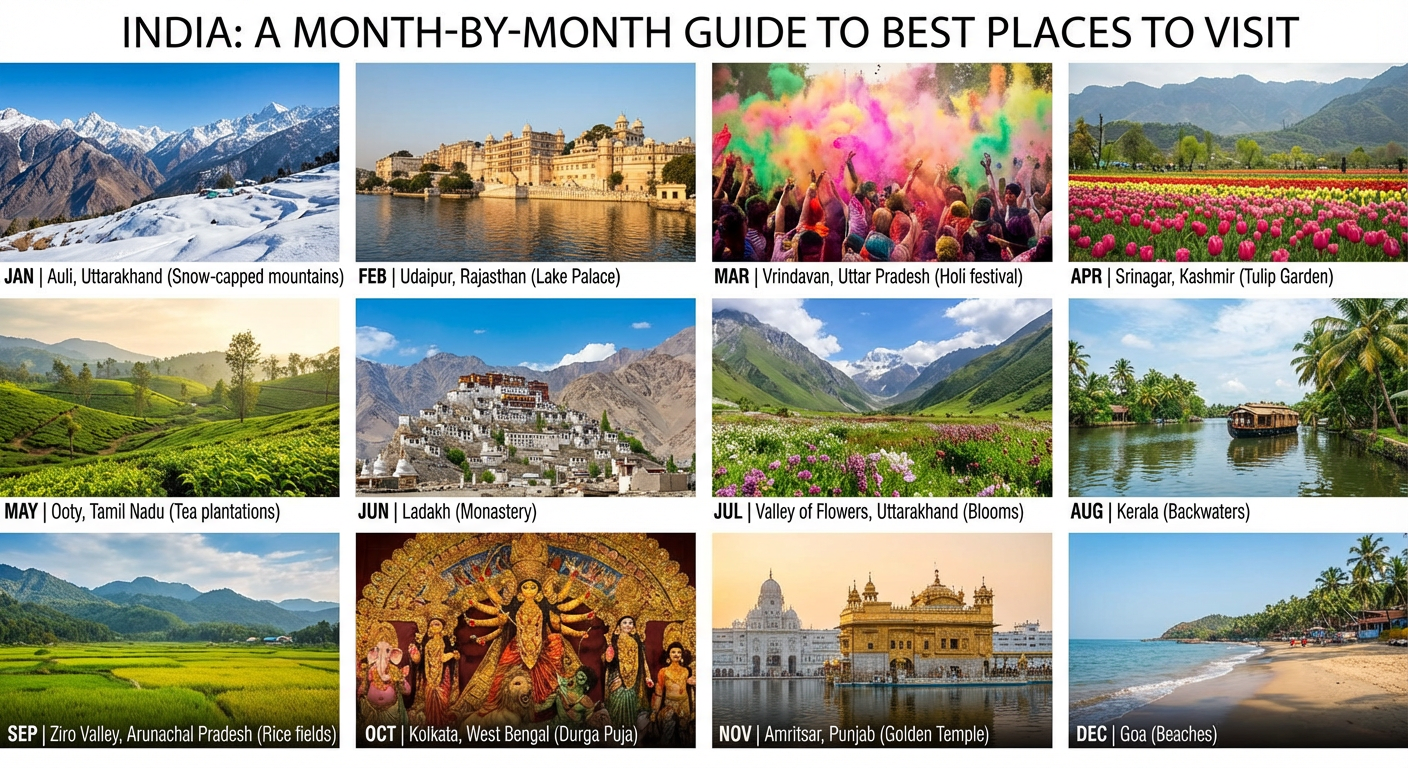
India’s climate changes dramatically across regions, which means timing matters when you plan your trip. Visit the wrong place at the wrong time and you might face monsoon floods or scorching heat.
Get it right, and you’ll experience perfect weather, vibrant festivals, and stunning landscapes at their peak. This guide breaks down the best destinations for every month of the year, helping you make the most of India’s incredible diversity no matter when you travel.
1) January: Goa’s Golden Beach Season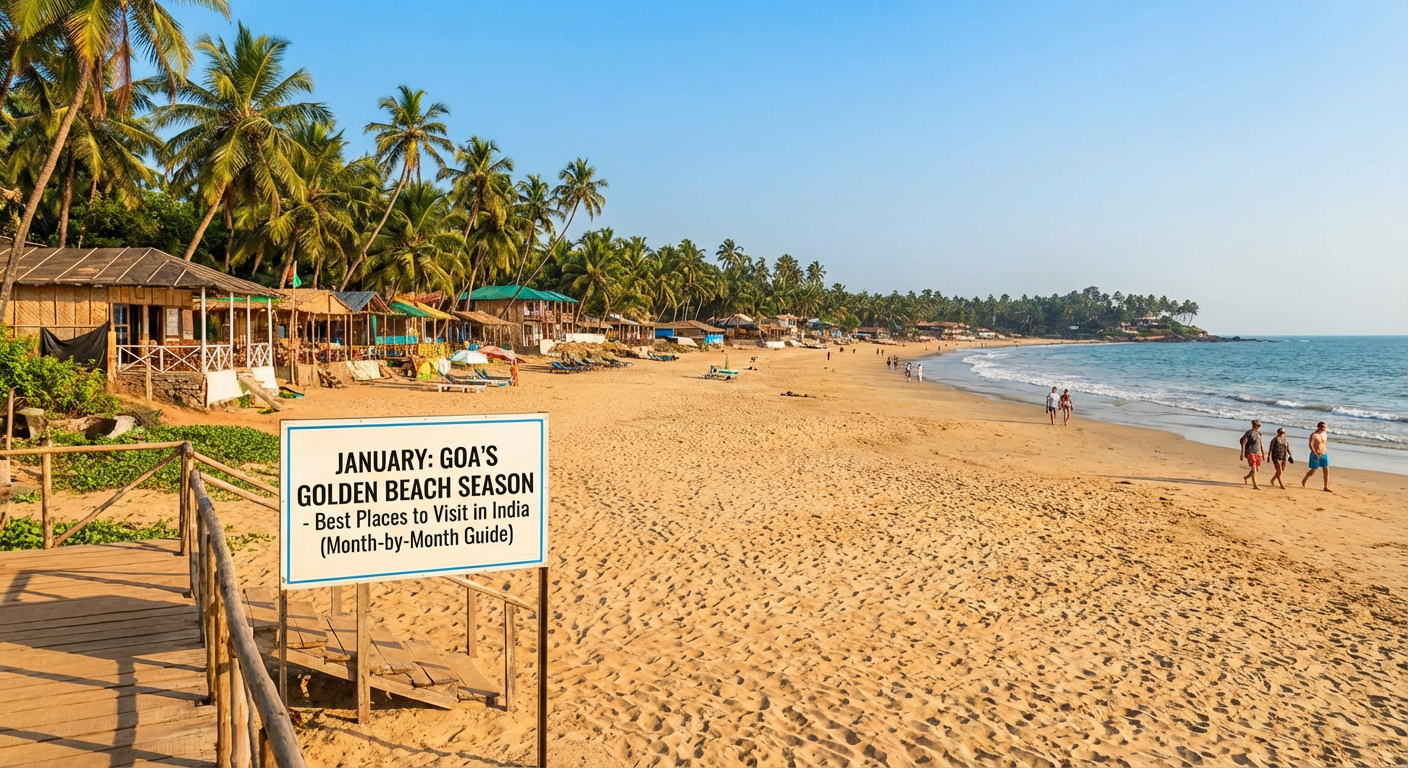
January is peak season in Goa, when the weather is dry, sunny, and perfect for beach lounging. The temperature hovers around a comfortable 25 to 30 degrees Celsius, making it ideal for water sports, sunbathing, and exploring the Portuguese architecture in Old Goa.
The party scene is lively, but you’ll also find quiet beaches in South Goa if you prefer peace over crowds. Book accommodations early, as this is when tourists from around the world flock to India’s smallest state.
2) February: Rann of Kutch for the White Desert Festival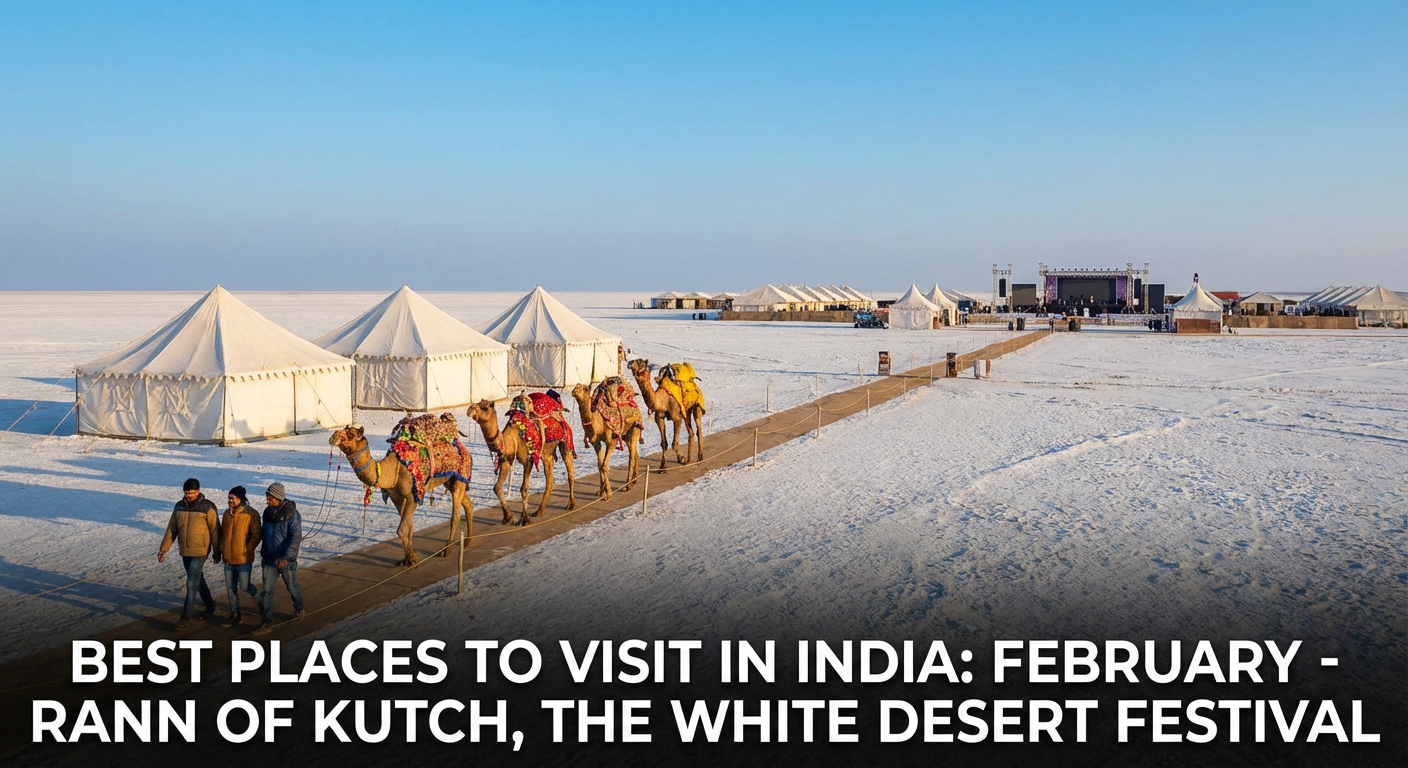
February brings the tail end of the Rann Utsav, a cultural festival held on the white salt desert of Kutch in Gujarat. The landscape looks otherworldly, especially during full moon nights when the white salt plains seem to glow.
You can stay in traditional bhungas (mud huts), watch folk performances, and shop for exquisite handicrafts made by local artisans. The weather is pleasant, with cool nights and warm days perfect for exploring this unique terrain.
3) March: Holi Celebrations in Mathura and Vrindavan
March is synonymous with Holi, India’s most colorful festival, and there’s no better place to experience it than in Mathura and Vrindavan, the birthplace of Lord Krishna.
The celebrations here last for several days, with flower showers, music, dance, and of course, vibrant gulal (colored powder) thrown everywhere.
The atmosphere is electric, spiritual, and joyous. If you want a more subdued experience, head to Rajasthan where palaces host elegant Holi parties with folk music and traditional sweets.
4) April: Valley of Flowers Trek in Uttarakhand
By April, the snow begins to melt in Uttarakhand, making it the right time to prepare for the Valley of Flowers trek, which fully opens by June. However, April is perfect for visiting nearby destinations like Rishikesh and Haridwar for yoga retreats and spiritual experiences along the Ganges.
The weather is warming up but still pleasant in the hills. If you’re an avid trekker, this is also a good month for the Kedarkantha or Har Ki Dun treks before the summer heat arrives in the plains.
5) May: Ladakh’s High-Altitude Beauty Awakens
May marks the opening of the roads to Ladakh after the long winter closure. This is when the high-altitude desert starts to come alive, with clear blue skies, snow-capped peaks, and monasteries perched on dramatic cliffs.
The temperature is still cool, especially at night, but the days are sunny and perfect for sightseeing. Popular spots include Pangong Lake, Nubra Valley, and the ancient monasteries of Thiksey and Hemis. Keep in mind that some higher passes may still have snow, so check road conditions before you head out.
6) June: Monsoon Magic in Munnar’s Tea Gardens
June ushers in the monsoon, and Munnar in Kerala transforms into a lush green paradise. The tea plantations glisten with raindrops, waterfalls come alive, and the mist rolling over the hills creates a dreamlike atmosphere.
This is the off-season, so you’ll find fewer tourists and better hotel rates. Take a tour of a tea estate, visit the Eravikulam National Park to spot the endangered Nilgiri Tahr, or simply relax with a hot cup of chai while watching the rain. Just pack good rain gear and be prepared for wet weather.
7) July: Spiti Valley for Adventurous Souls
July is one of the best months to visit Spiti Valley in Himachal Pradesh, a remote region often called the Middle Land between India and Tibet. The roads are open, the weather is mild, and the barren mountain landscapes are stunning under the summer sun.
Visit the Key Monastery, Chandratal Lake, and the villages of Kibber and Langza. Spiti is less crowded than Ladakh and offers a raw, rugged beauty that appeals to travelers looking for solitude and spiritual reflection.
8) August: Coorg’s Coffee Plantations in Full Bloom
August is monsoon season in Coorg, Karnataka, and the region is at its most scenic. The coffee plantations are lush, waterfalls like Abbey Falls are in full flow, and the air is filled with the scent of wet earth and spices.
Coorg is less touristy during the rains, which means you can explore homestays, go on plantation tours, and enjoy local Coorgi cuisine in peace. The weather is cool and refreshing, making it a great escape from the humidity of India’s plains.
9) September: Gangtok and Sikkim’s Post-Monsoon Freshness
September marks the end of the monsoon in Sikkim, and the state comes alive with clear skies, blooming rhododendrons, and views of Kanchenjunga, the third-highest peak in the world. Gangtok, the capital, is a great base for exploring monasteries, lakes, and the famous Tsomgo Lake.
You can also take day trips to Pelling or Lachung. The weather is cool and comfortable, and the landscapes are incredibly green after months of rain. This is also a good time to visit before the winter tourist rush begins.
10) October: Jaipur and Rajasthan’s Royal Heritage
October signals the start of the best travel season in Rajasthan. The oppressive summer heat has passed, and the weather is warm but pleasant.
Jaipur, the Pink City, is perfect for exploring forts like Amber and Nahargarh, wandering through bustling bazaars, and staying in heritage hotels.
You can also visit nearby Pushkar for the famous camel fair if you’re there in early November. Rajasthan’s deserts, palaces, and cultural richness shine brightest during these cooler months.
11) November: Varanasi for Spiritual Immersion
November is an ideal time to visit Varanasi, one of the oldest living cities in the world. The weather is cool and dry, making it comfortable to walk along the ghats and explore narrow alleyways filled with temples and street vendors.
Witness the mesmerizing Ganga Aarti at Dashashwamedh Ghat, take a boat ride at sunrise, and soak in the spiritual energy that permeates every corner of this ancient city. Varanasi is intense and overwhelming, but November’s pleasant weather makes it easier to take in the experience.
12) December: Andaman Islands for Tropical Escapes
December is perfect for the Andaman Islands, where the weather is sunny, the sea is calm, and visibility for snorkeling and diving is excellent. Havelock Island, now called Swaraj Dweep, offers some of the best beaches in India, including Radhanagar Beach.
You can also visit Neil Island for a quieter vibe or take a trip to the Cellular Jail in Port Blair to learn about India’s colonial history. The water is warm, the skies are clear, and the islands offer a tropical paradise without leaving India.
India’s size and climatic diversity mean there’s always somewhere worth visiting, no matter which month you choose. From the beaches of Goa to the mountains of Ladakh, from spiritual cities to remote valleys, every season offers something special.
Use this guide to align your travel dates with the best weather and experiences, and you’ll come away with memories that last a lifetime. Happy travels, and may your time in India be as rich and varied as the country itself.