
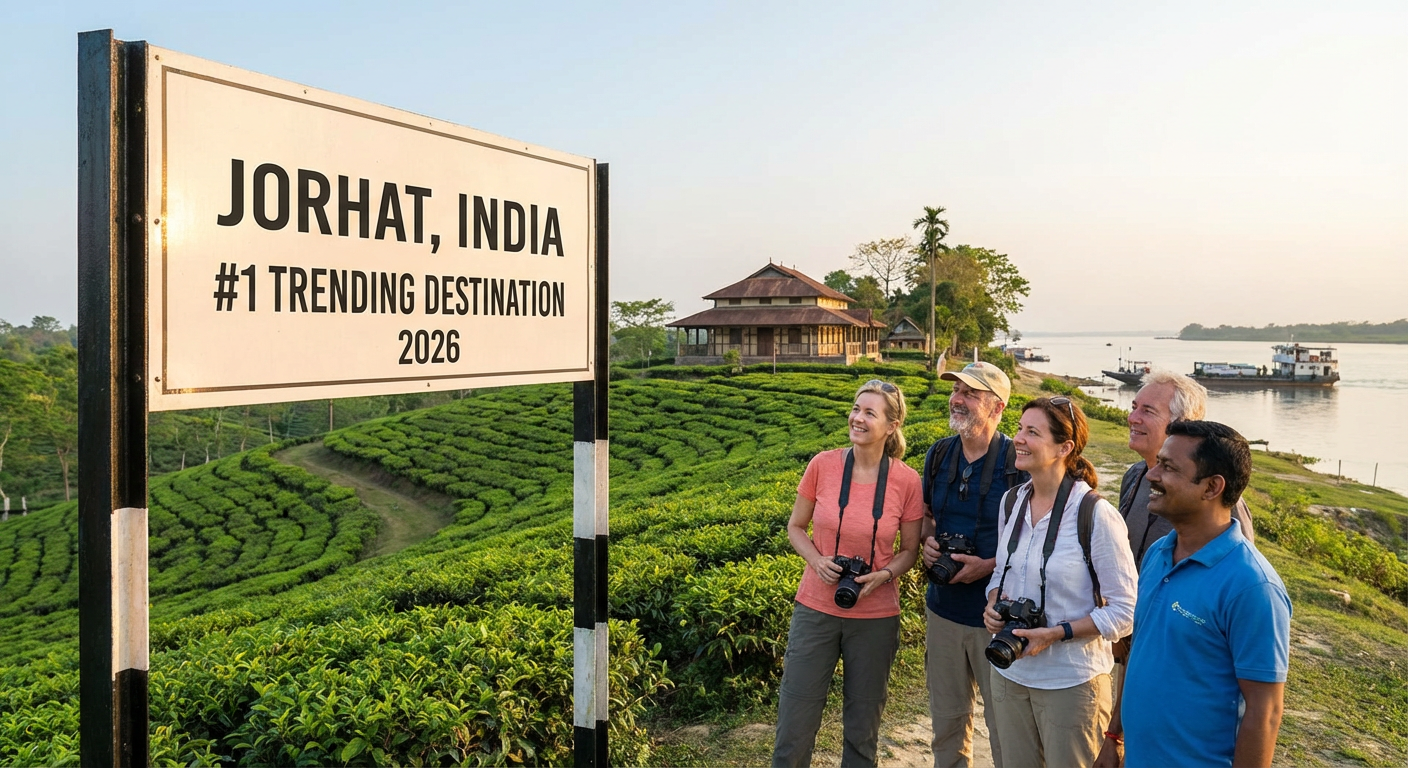
Jorhat, a charming town in Assam, has quietly become one of India’s most interesting travel spots. Once known mainly as a gateway to other places, this cultural hub now draws visitors who want authentic experiences, natural beauty, and a slower pace of life.
Whether you’re a tea enthusiast, a history buff, or someone who simply wants to explore a part of India that feels genuine and unhurried, Jorhat has something special to offer. Here are eleven solid reasons why this Assam town deserves a spot on your travel list.
1) Home to the World’s Largest River Island, Majuli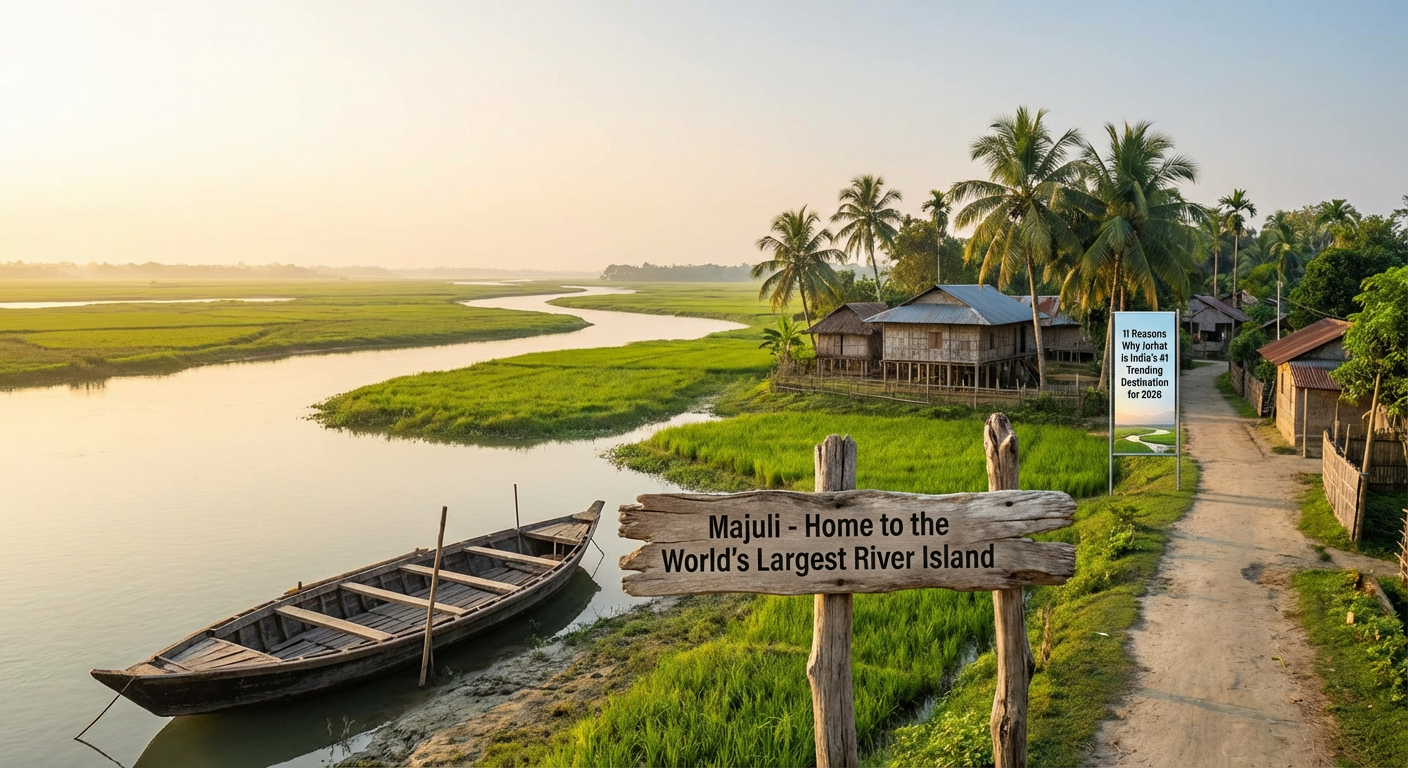
Just a short ferry ride from Jorhat lies Majuli, the world’s largest river island in the middle of the Brahmaputra River. This island spans over 350 square kilometers and hosts a thriving community of monks, artisans, and farmers who have preserved their traditional way of life for centuries.
Majuli serves as the cultural heart of Assamese neo-Vaishnavite culture, with ancient monasteries called satras that still practice classical dance, music, and mask-making.
The island’s landscape changes with the seasons, offering lush greenery during monsoons and golden fields during harvest time. Visiting Majuli gives you a rare glimpse into a self-sustained island community that feels like stepping back in time.
2) The Tea Capital of India Offers Endless Green Vistas
Jorhat sits in the heart of Assam’s tea country, surrounded by some of the oldest and most prestigious tea estates in India. The region produces a significant portion of the world’s tea, and the sight of rolling tea gardens stretching to the horizon is reason enough to visit.
Many estates welcome visitors for tours where you can walk through the plantations, watch tea pickers at work, and learn about the entire process from leaf to cup.
The estates also offer tasting sessions where you can sample different varieties of Assam tea, from robust breakfast blends to delicate orthodox teas.
The cool climate and misty mornings in the tea gardens create a peaceful atmosphere that feels worlds away from city life.
3) A Living Laboratory of Biodiversity at Tocklai Tea Research Institute
The Tocklai Tea Research Institute, established over a century ago, remains the oldest and largest tea research center in the world. This facility has shaped global tea cultivation practices and continues to work on improving tea quality, sustainability, and farming techniques.
Visitors with an interest in agriculture or science find the institute fascinating, as it showcases how traditional farming meets modern research.
The institute’s museum displays antique tea-making equipment, historical documents, and samples that tell the story of how Assam became synonymous with quality tea.
While not a typical tourist attraction, Tocklai offers a deeper understanding of the industry that defines this region.
4) Rich Assamese Culture Expressed Through Sattriya Dance and Music
Jorhat serves as a guardian of Sattriya, one of India’s eight classical dance forms that originated in the Assamese monasteries. This devotional dance combines graceful movements, elaborate costumes, and rhythmic music to tell stories from Hindu mythology.
Throughout the year, especially during festivals, you can witness live performances in the satras around Jorhat and Majuli.
Local artists also practice traditional Assamese music using instruments like the khol (drum) and taal (cymbals), creating soundscapes that have remained largely unchanged for generations.
Experiencing these art forms in their original setting, rather than on a formal stage, adds authenticity and emotional depth to the performance.
5) Historic Monuments That Tell Stories of Ahom Rule
The Ahom dynasty ruled Assam for six centuries, and Jorhat contains several architectural remnants from this period. The Raja Maidam, a series of burial mounds for Ahom royalty, stands as a reminder of the sophisticated civilization that once flourished here.
Nearby, you’ll find old palaces, temples, and tanks that showcase the Ahom architectural style, which blends Hindu and indigenous influences.
These sites receive far fewer visitors than India’s more famous monuments, which means you can explore them at your own pace without crowds.
History enthusiasts appreciate how these structures provide context for understanding Assam’s distinct identity within India’s larger story.
6) Gibbon Wildlife Sanctuary Protects India’s Only Apes
Located about an hour from Jorhat, the Hoollongapar Gibbon Wildlife Sanctuary protects India’s only population of apes, including the western hoolock gibbon.
This small sanctuary packs remarkable biodiversity into its 20 square kilometers, with seven primate species, numerous bird species, and dense tropical forest.
Early morning visits offer the best chance to hear the haunting calls of gibbons echoing through the canopy and, with patience, to spot these acrobatic primates swinging through the trees.
The sanctuary also hosts capped langurs, slow lorises, and various species of macaques. For wildlife enthusiasts, this sanctuary represents a rare opportunity to see species found nowhere else in India.
7) Authentic Assamese Cuisine That Goes Beyond Stereotypes
Jorhat offers food lovers a chance to taste genuine Assamese cuisine, which differs significantly from other Indian regional foods.
The local diet emphasizes fresh ingredients, minimal spicing, and techniques like steaming and fermenting. Dishes like masor tenga (sour fish curry), khar (an alkaline preparation), and pitha (rice cakes) showcase flavors that feel unfamiliar yet comforting.
Bamboo shoot pickle, duck curry, and various preparations using local greens appear regularly on traditional menus.
Small local restaurants and home stays serve food that reflects what Assamese families actually eat, rather than adapted versions for outside palates. This culinary authenticity makes every meal an opportunity to understand the local culture better.
8) Festivals That Bring Communities Together in Colorful Celebration
Jorhat comes alive during festivals like Bihu, which marks the Assamese New Year and the changing agricultural seasons.
During Bihu, the entire town participates in traditional dances, music performances, and community feasts that last for days. Raas Leela, celebrated in the satras, features elaborate theatrical performances with dancers wearing ornate costumes and masks.
Ali-ai-ligang, celebrated by the Mising tribe, showcases indigenous traditions with its own distinct music and dance forms.
These festivals aren’t staged for tourists but are genuine community celebrations that welcome respectful visitors. Timing your visit around these festivals provides insight into how deeply culture and tradition still shape daily life in Jorhat.
9) The Brahmaputra River Offers Stunning Sunsets and River Life
The mighty Brahmaputra River flows near Jorhat, creating dramatic landscapes and supporting a way of life centered around the water.
River cruises and ferry rides provide perspectives on the region that you can’t get from land, passing fishing villages, sandbanks, and migratory birds.
The river changes character throughout the year, swelling during monsoons and revealing vast sandy islands during dry months.
Local fishermen use traditional techniques passed down through generations, and you can often see them casting nets from small wooden boats.
The sunsets over the Brahmaputra are particularly memorable, with the wide sky reflecting oranges and pinks across the water’s surface.
10) Handloom and Handicraft Traditions Still Practiced by Local Artisans
Jorhat and the surrounding areas maintain strong handloom traditions, particularly the weaving of muga silk, which is indigenous to Assam.
This golden silk comes from semi-wild silkworms and produces fabric with a natural sheen that improves with age. Visiting weaving centers lets you watch artisans work on traditional looms, creating intricate patterns that have been refined over centuries.
The region also produces beautiful pottery, bamboo crafts, and traditional masks used in religious performances.
Purchasing directly from artisans ensures your money supports these traditional crafts and the families who keep them alive. These crafts represent not just souvenirs but tangible connections to Assamese cultural heritage.
Bonus Point: Accessibility Has Improved While Maintaining Authentic Character
Jorhat has become easier to reach without losing its essential character. The town has an airport with regular flights connecting it to major Indian cities, making it far more accessible than it was just a few years ago.
Road and rail connections have also improved, offering multiple options for travelers. Despite these improvements, Jorhat hasn’t developed the commercial tourism infrastructure that often changes a destination’s personality.
Hotels remain modest and locally run, restaurants serve real local food, and attractions maintain their original purpose rather than being redesigned for tourists.
This balance between accessibility and authenticity makes Jorhat appealing to travelers who want comfort and convenience without sacrificing the genuine experience that makes travel meaningful.
Jorhat offers something increasingly rare in modern travel: a destination that welcomes visitors without performing for them.
The tea gardens, river islands, wildlife sanctuaries, and cultural traditions exist first for the local community and secondly for curious travelers.
This authenticity, combined with improved accessibility and a wealth of natural and cultural attractions, explains why more people are adding Jorhat to their India itineraries.
If you’re tired of overcrowded tourist spots and want to experience a part of India that still moves at its own rhythm, Jorhat deserves serious consideration. Pack light, bring your curiosity, and prepare to experience Assam at its most genuine.